Case Study · Hazlehurst, Georgia
Hardwood and Softwood Mill: Stick-Laying and Crib Stackers
Two Gillingham-Best lumber stackers engineered for high-throughput, single-operator performance at one of North America’s highest-volume hardwood operations.
Mill
Configuration
Product
Customer: Beasley Forest Products
Two Stackers Built for Single-Operator Throughput
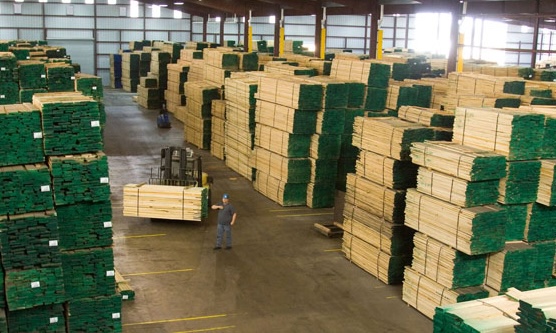
At Beasley Forest Products’ Hazlehurst, Georgia mill, two Gillingham-Best lumber stackers are engineered for high-throughput, single-operator performance.

Each system uses Gillingham-Best’s patented Variable Pan Geometry (VPG™) to retrieve and place stickers precisely under each course, while the Fastack™ frame minimizes machine motion so the forks can index and return quickly for the next layer.
Controls are screen-based with full diagnostics, allowing width/thickness changes from the console and stable operation even with marginal or bowed stickers.
In typical configurations these stackers cycle courses at high speed, with sticker delivery routed below the chain (no overhead structures), and course weights ranging into the thousands of pounds—capabilities that align well with Beasley’s heavy hardwood packages.
For Beasley’s operators, the result is a dependable, low-maintenance stacking cell that reduces labor while protecting downstream quality:
- Minimal operator intervention; accommodates imperfect product and stickers
- Exact sticker alignment as the forks retract — consistent kiln drying and uniform packages
- Simple, rugged mechanisms and a bell-crank fork drive for reliability and shorter downtimes
- Diagnostic tools that help maintenance teams troubleshoot quickly
Together, the two units give the mill redundant, high-speed stacking capacity that keeps pace with the primary breakdown and sorting lines through long production runs.
That throughput matters because Hazlehurst is one of North America’s highest-volume hardwood operations and part of a vertically integrated enterprise supplying mats, grade lumber, railroad ties, pallet stock, and more to domestic and export markets.
Beasley’s group footprint includes multiple mills and segments, and the company highlights the ability to produce 500+ access mats per day and maintain deep inventories—demanding steady green-end flow and efficient packaging to feed kilns and shipping.
Installing two Gillingham-Best stackers helps sustain the mill’s mix of species and product lines while supporting Beasley’s commitments to quality, on-time shipment, and scale.
Other Projects
More Installations
Thinking About a Similar Installation?
Gillingham-Best configures each stacker system to the mill’s layout, product mix, and throughput target. Tell us your requirements and we’ll scope the right configuration.
Request a Quote Contact Us