Third Generation Stacker Platform
Proven Machine.
Modern Technology.
The Third Generation Stacker is the current production version of the GBI VPG Automatic Stick Placing Stacker. The mechanical architecture is unchanged — VPG, Fastack frame, hydraulic drive. What is new is the controls, sensing, and operator-experience layer built around it.
Platform Overview
What "Third Generation" Means
GBI stackers have always been mechanical machines engineered for mill-floor reality. The Third Generation designation is not a new machine — it is the modern controls platform that every new GBI stacker now ships with, and that existing GBI stackers in the field can be retrofitted onto.
The platform is built on Rockwell Automation hardware and software: a ControlLogix L8 processor, FactoryTalk Optix HMI, and EtherNet/IP plus IO-Link networking throughout. The sensing package uses Allen-Bradley absolute encoders, Keyence laser scanners, and Pepper+Fuchs IO-Link lasers — recognized quality brands that every sawmill automation team already specifies and stocks.
The operator experience is built around verification, not automation for its own sake. The stacker cycles only when three checks pass:
- Laser sensing confirms every stick is in the correct pan
- An overhead laser confirms the rake-off is safely seated before the next motion
- A scanning curtain confirms no stick has been pulled back onto the carriage
That is why the Third Generation platform lets GBI stackers run in auto-cycle with a single operator — without the crash events that drive most unplanned downtime.
Architecture
Three Layers, One Platform
Control & Networking
Rockwell ControlLogix L8 processor with distributed I/O, connected by EtherNet/IP and IO-Link over quick-disconnect field cabling.
- ControlLogix L8 processor
- Distributed I/O
- EtherNet/IP backbone
- IO-Link for smart sensors
- Quick-disconnect cabling
HMI & Reporting
FactoryTalk Optix HMI with dedicated Stick Status and diagnostics screens, and a built-in web port for remote access to production reports.
- FactoryTalk Optix runtime
- Stick Status live screen
- Production reporting
- Web access to reports
- Operator alert notifications
Sensing & Verification
Absolute encoders, laser scanners, and per-pan IO-Link lasers — brand-name components engineered into a complete verification system.
- Allen-Bradley absolute encoders
- Keyence scanning curtains
- Keyence through-beam lasers
- Pepper+Fuchs IO-Link lasers
- Automatic air blow-off
The Feature Set
Nine Upgrades That Define the Third Generation
Each of the following is a discrete capability, available on new Third Generation stackers and as a line item or bundled package on the Controls, Sensors and Monitoring Upgrade retrofit. Each is built around a specific problem mills see on the stacker floor — and each is why the Third Generation machine runs with less downtime than earlier generations.
High-Resolution Carriage Encoder
An Allen-Bradley EtherNet/IP absolute encoder on the carriage forks at 36,000-count resolution, up from 255 in earlier generations.
Problem solved: Earlier 255-count systems required careful mechanical trial-and-error to re-home after service. The new encoder homes in one operation, and the finer resolution makes every positioning move more accurate.
Uptime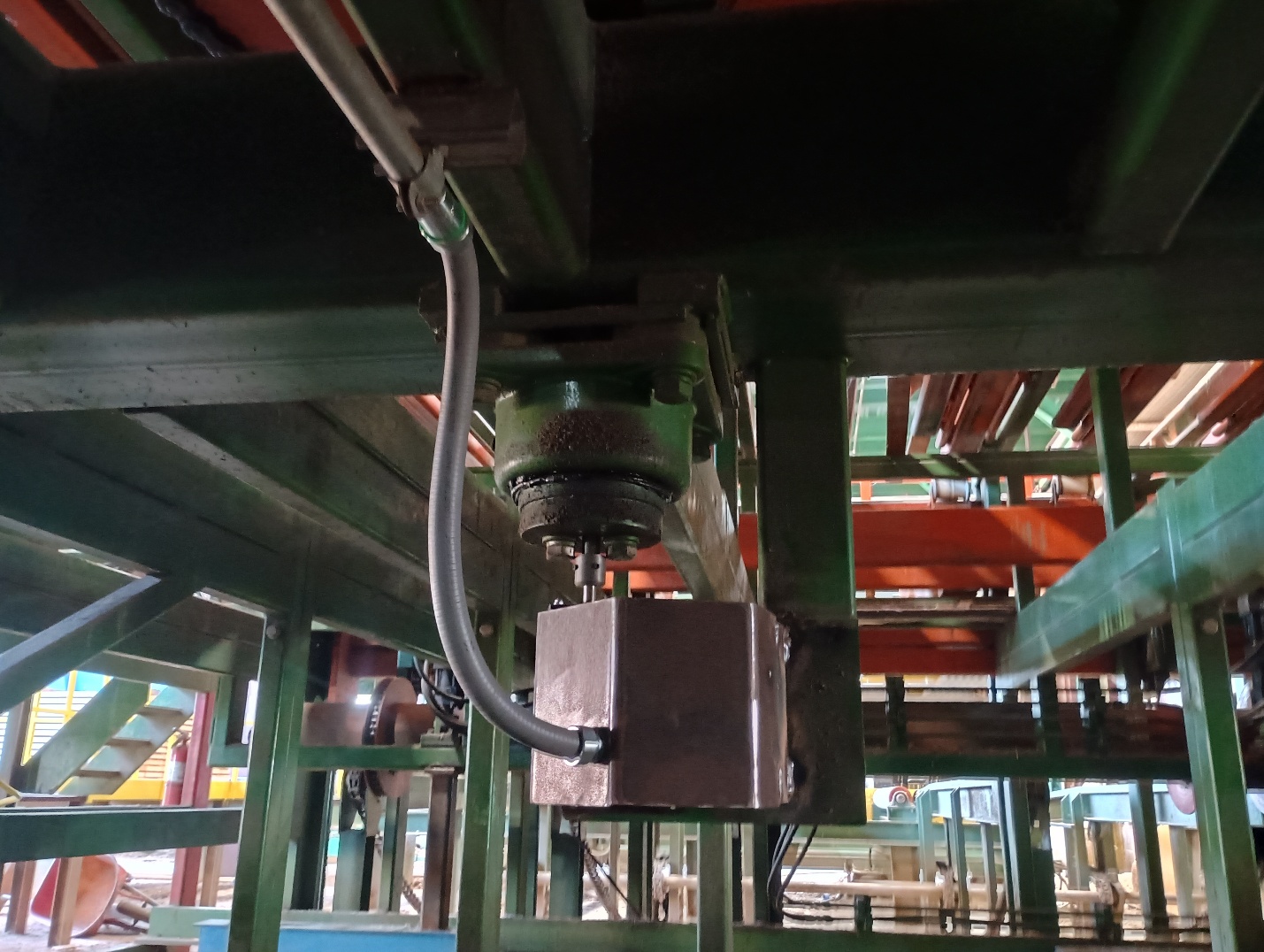
High-Resolution Distribution Chain Encoder
An Allen-Bradley EtherNet/IP absolute encoder on the distribution chain eliminates mechanical tab-wheel adjustment.
Problem solved: To re-time the distribution chain after service, the technician now sets the chain to its timing marks and presses the Home button on the HMI. No tab wheels, no trial-and-error.
Uptime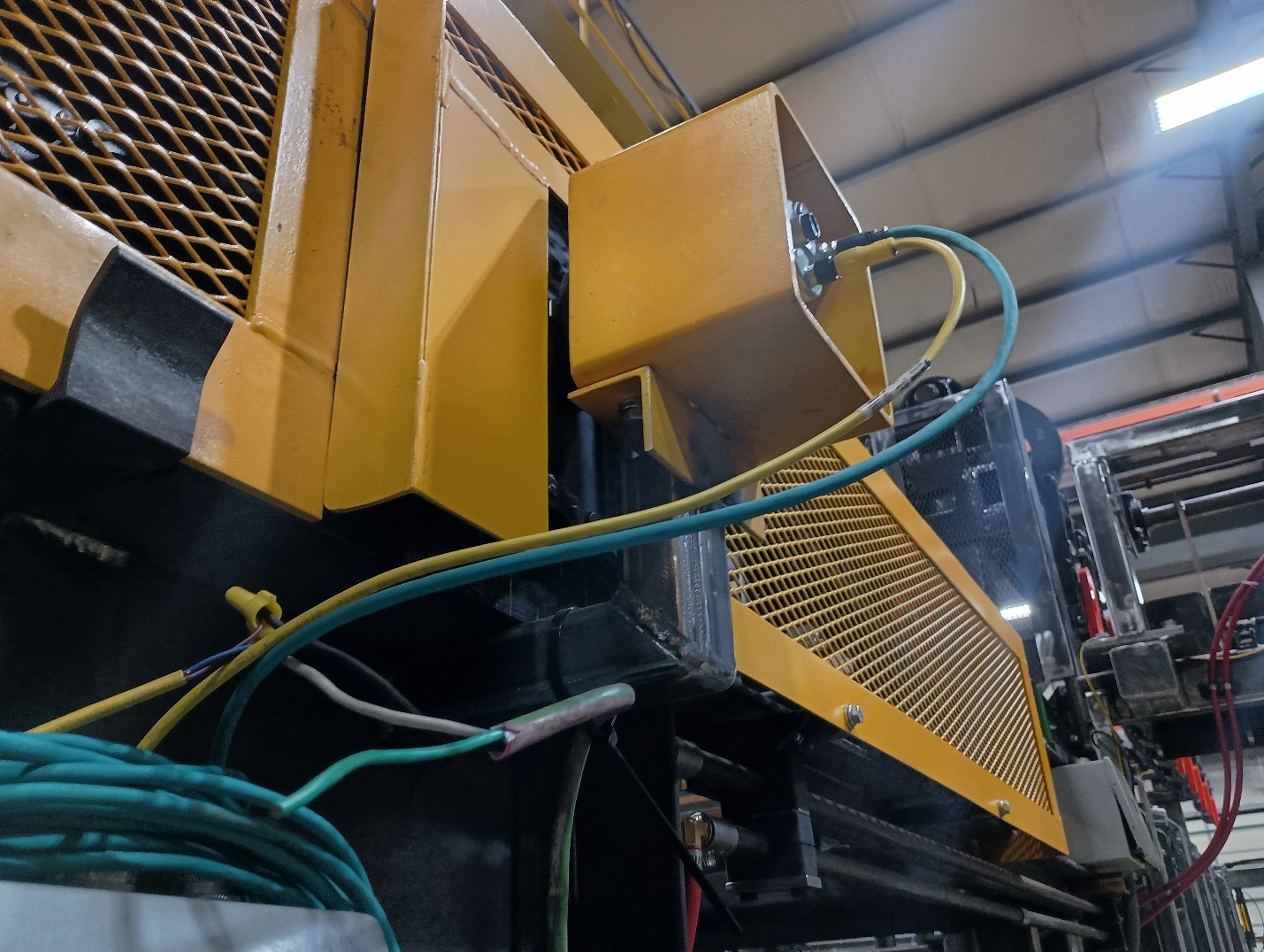
Pneumatic Distribution Chain Tensioning
An air cylinder applies tension to the distribution chain under pressure-switch verification, with a safety shut-off that bleeds system air before service.
Problem solved: When the chain skips a tooth, the operator opens the air switch to release tension, re-seats the chain in time, and re-applies air. No manual re-tensioning. The safety shut-off makes routine chain service safer.
Uptime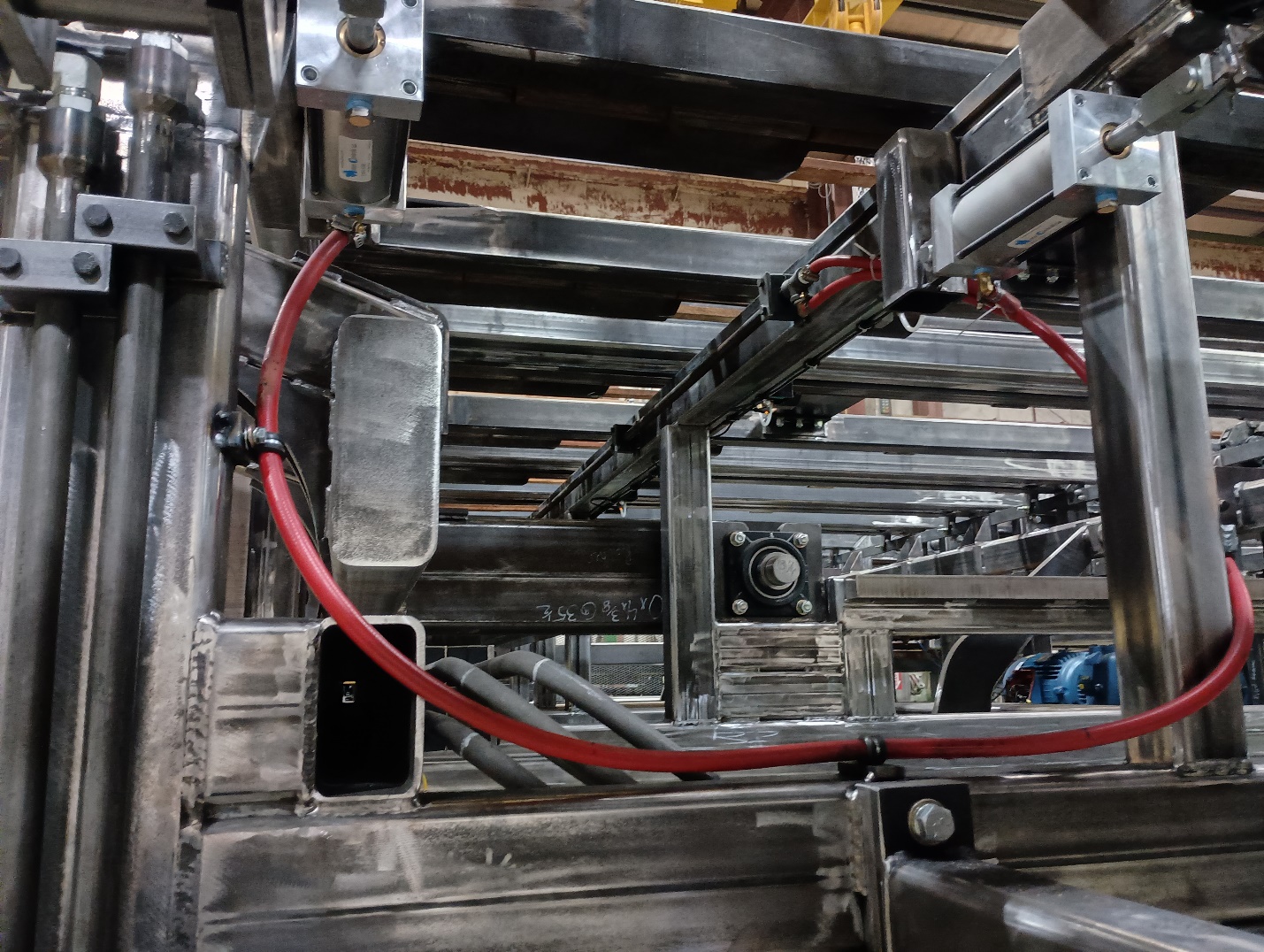
Automatic Front Stop Positioning
The operator enters course width on the HMI. The controller calculates the correct pinch point for that width and positions the front lumber stops automatically.
Problem solved: The pinch point between the overhead rake-off and the stick pan is different for every lumber width. Manually repositioning the stops for each width slows cycle time and causes boards to swing out and jam under the overhead rake-off. Automatic positioning removes the manual step and a common crash mode with it.
Throughput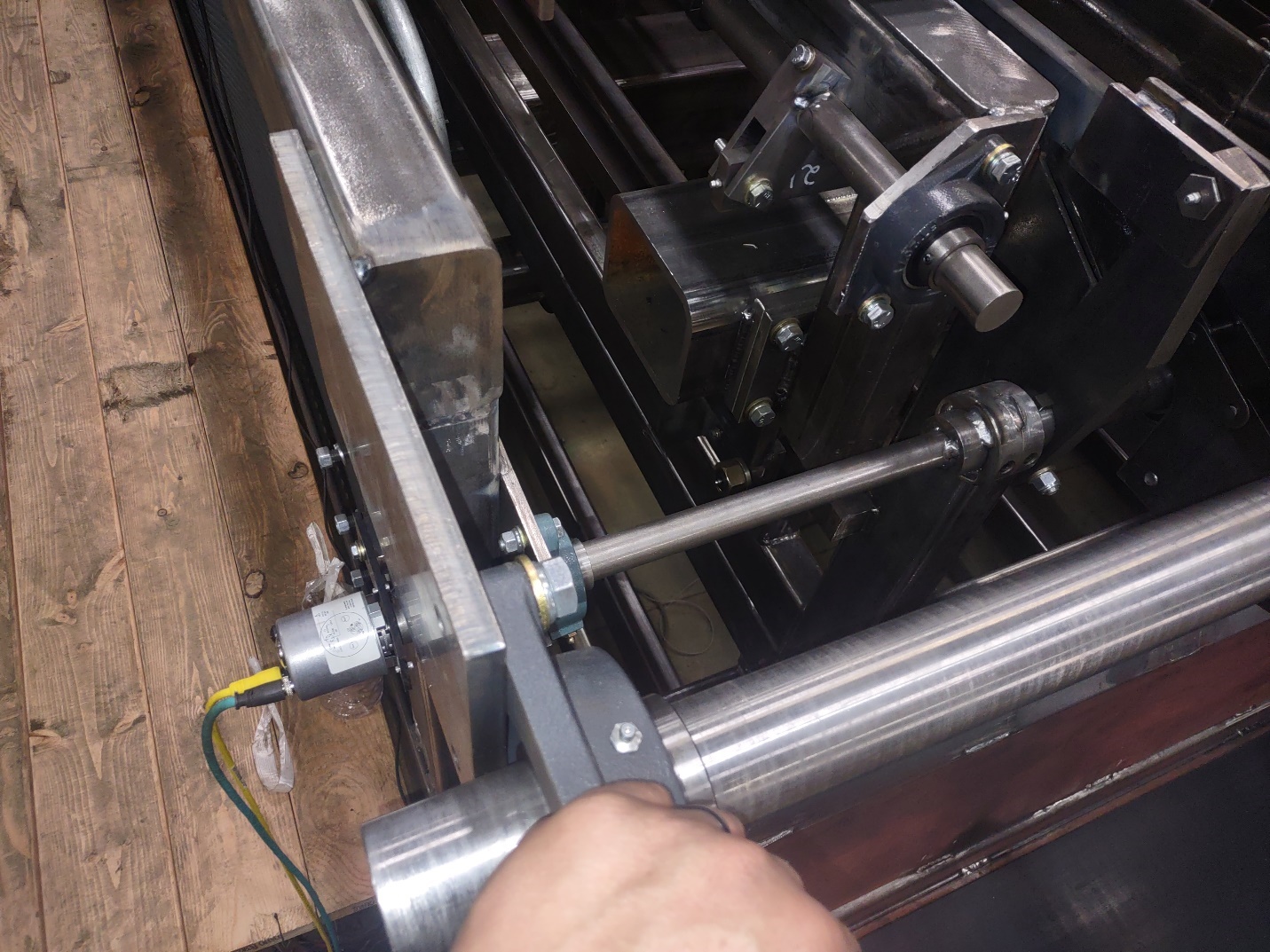
Overhead Rake-Off Crash Detection
A Keyence through-beam laser scans across the overhead rake-off as it descends. If any rake-off pad is not fully seated in its stick pan when the rake-off is down, the stacker cycle halts immediately.
Problem solved: An overhead rake-off crash is among the most destructive and costly failures a stacker can have. Detecting an out-of-position pad before the cycle commits prevents the crash.
Uptime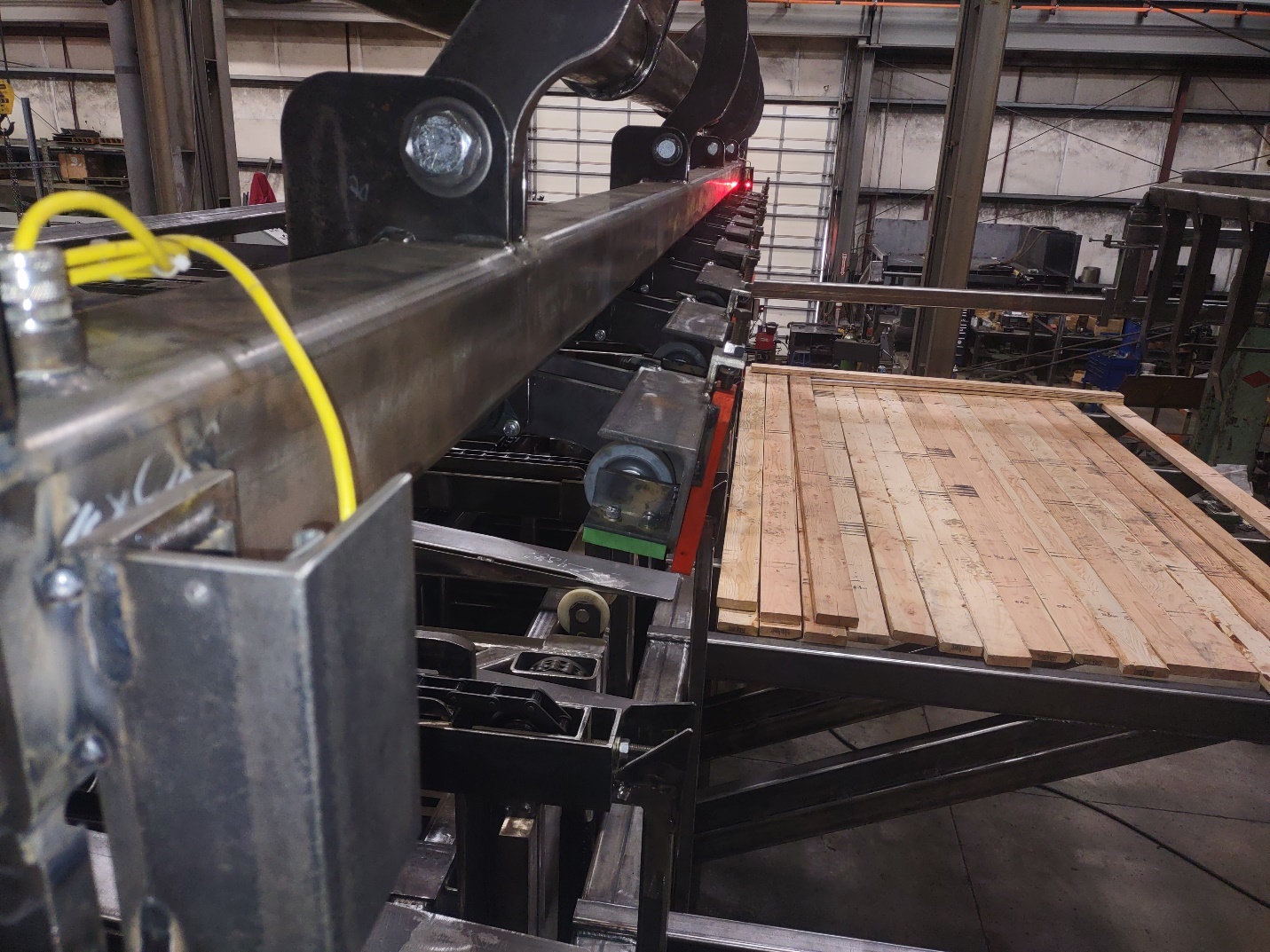
Pulled-Back Stick Scanner
A Keyence scanning curtain detects whether any sticks were not fully raked off the carriage forks during the prior cycle.
Problem solved: A single pulled-back stick can cause a major stacker crash on the next cycle. The scanner prevents the cycle from running until the operator clears the condition.
Uptime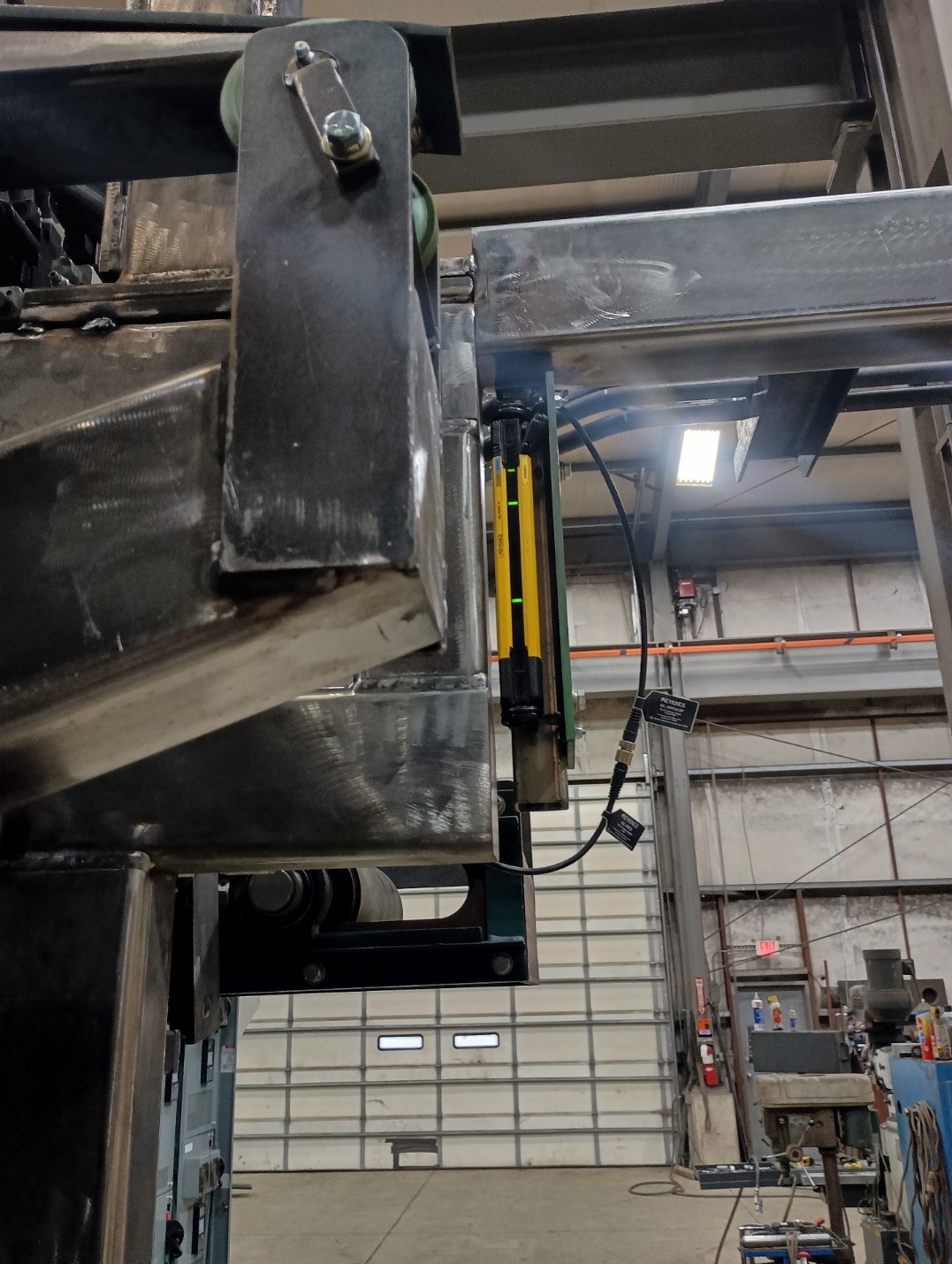
Stacker Auto Cycle
Front and rear photoeyes verify enough lumber is present to make up a course and the stacker advances automatically. Auto Cycle requires the Pulled-Back Stick Scanner and Overhead Rake-Off Crash Detection to be installed and active — enforced in the control logic.
Problem solved: Reduces the operator's cycle-by-cycle workload and supports sustained single-operator running when lumber flow is steady. The safety dependency means Auto Cycle can never run without the two most important crash-prevention systems.
Throughput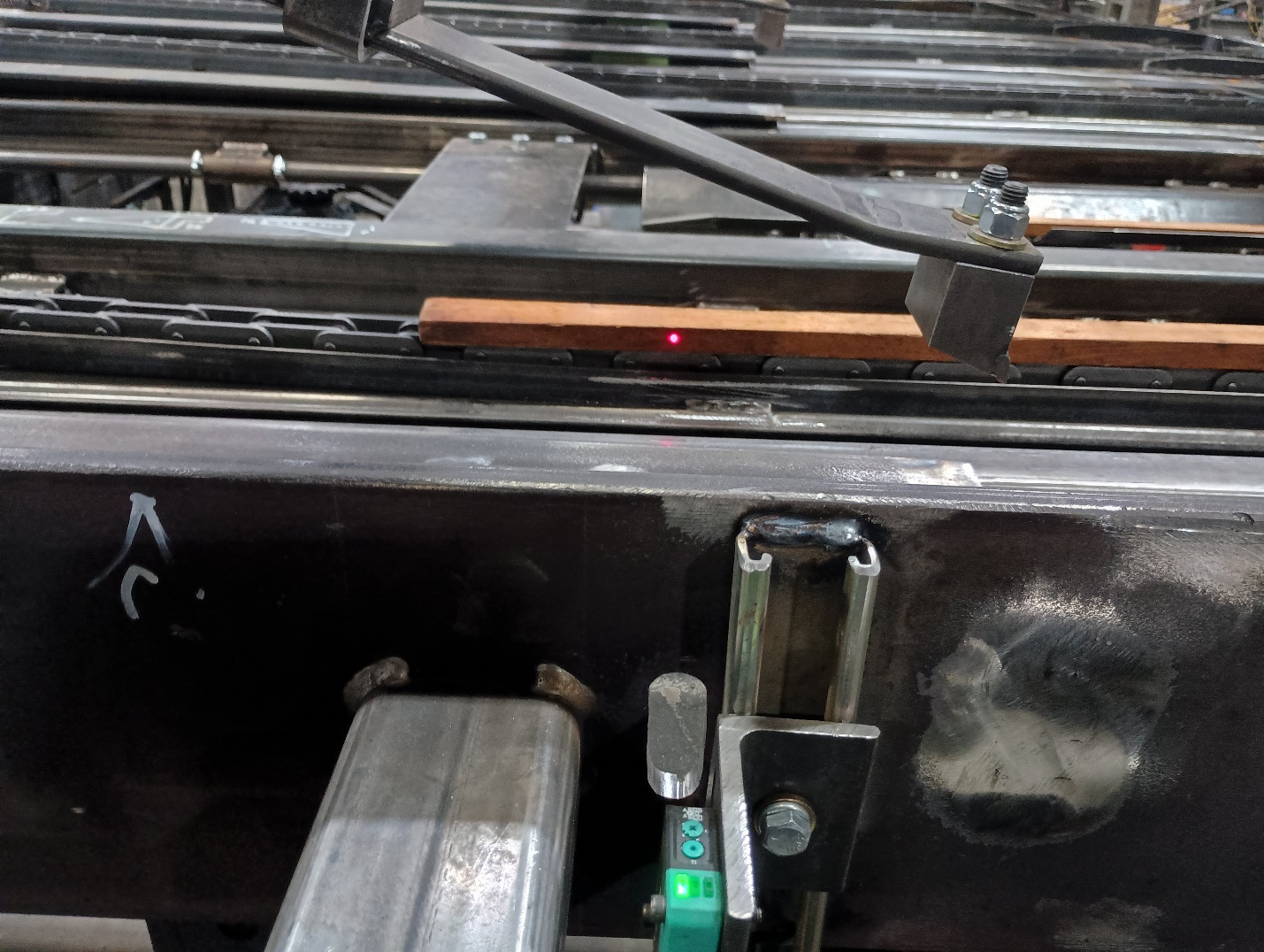
Distribution Chain Light Bar
An indicator light at every stick position on the distribution chain shows the operator where a stick should be. Light on, a stick should be present; light off, no stick should be present.
Problem solved: Gives the operator direct, at-a-glance confirmation that sticks are sequenced correctly before they enter the pan — the single best verification that the upstream stick handling is feeding the stacker correctly.
Efficiency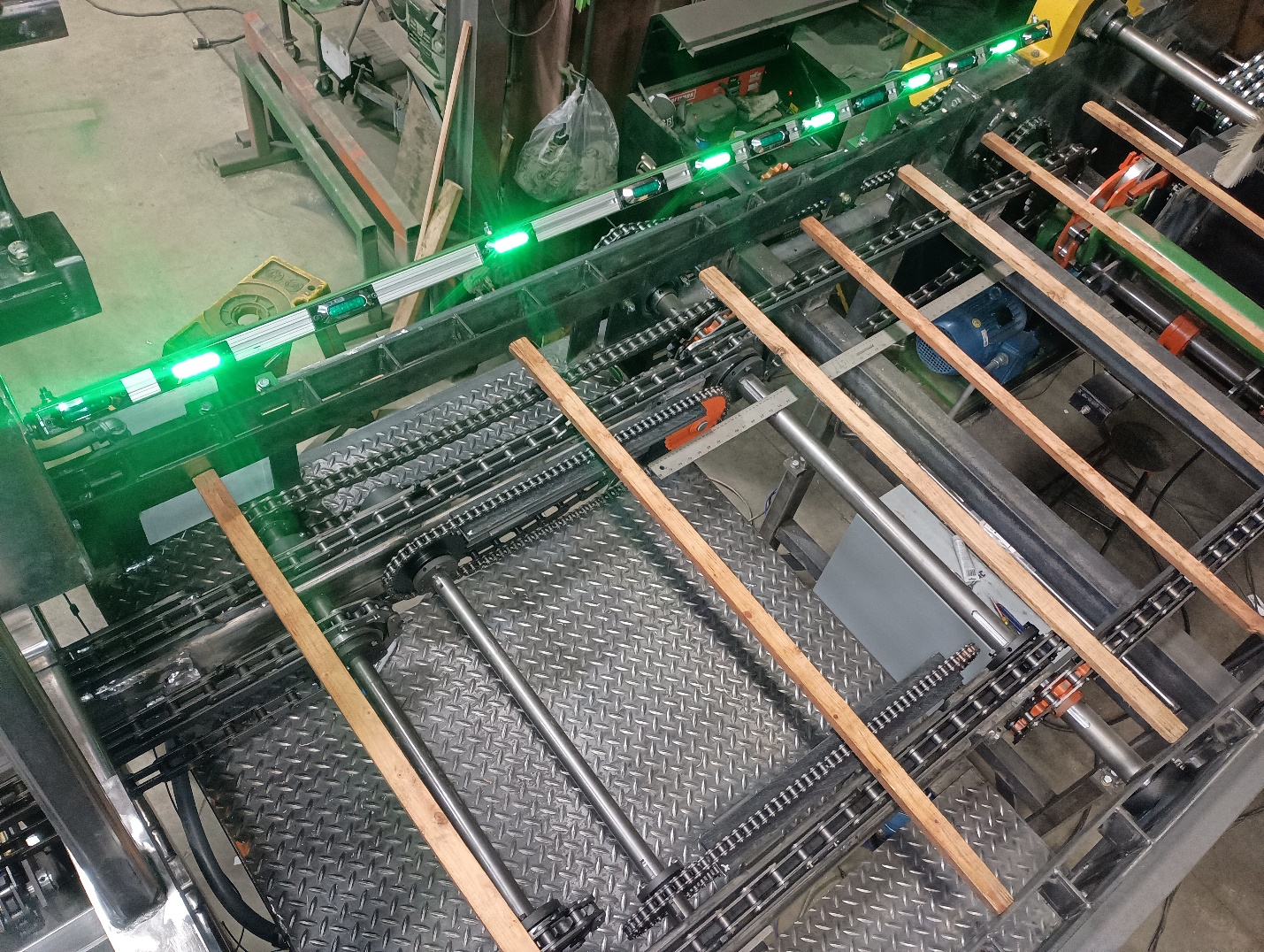
Stick-in-Pan Detection & Lumber Length Verification
A Pepper+Fuchs IO-Link laser at every stick position, fed by an air manifold with blow-off nozzles, measures distance to the nearest object and reports to the PLC whether it sees a stick on the distribution chain, a stick in the pan, lumber, or nothing.
Three capabilities come from the same sensing system: per-pan stick-in-pan verification, lumber length verification (by reading the farthest pan covered by lumber and comparing to the operator-entered length), and an operator console light bar that mirrors the per-pan status.
Problem solved: In auto-cycle, the stacker will not run if the lumber length is wrong or if any stick is not in its correct pan — preventing multiple crash modes simultaneously. The HMI includes a dedicated Stick Status screen for diagnostics, and the air blow-off runs automatically at package completion.
Uptime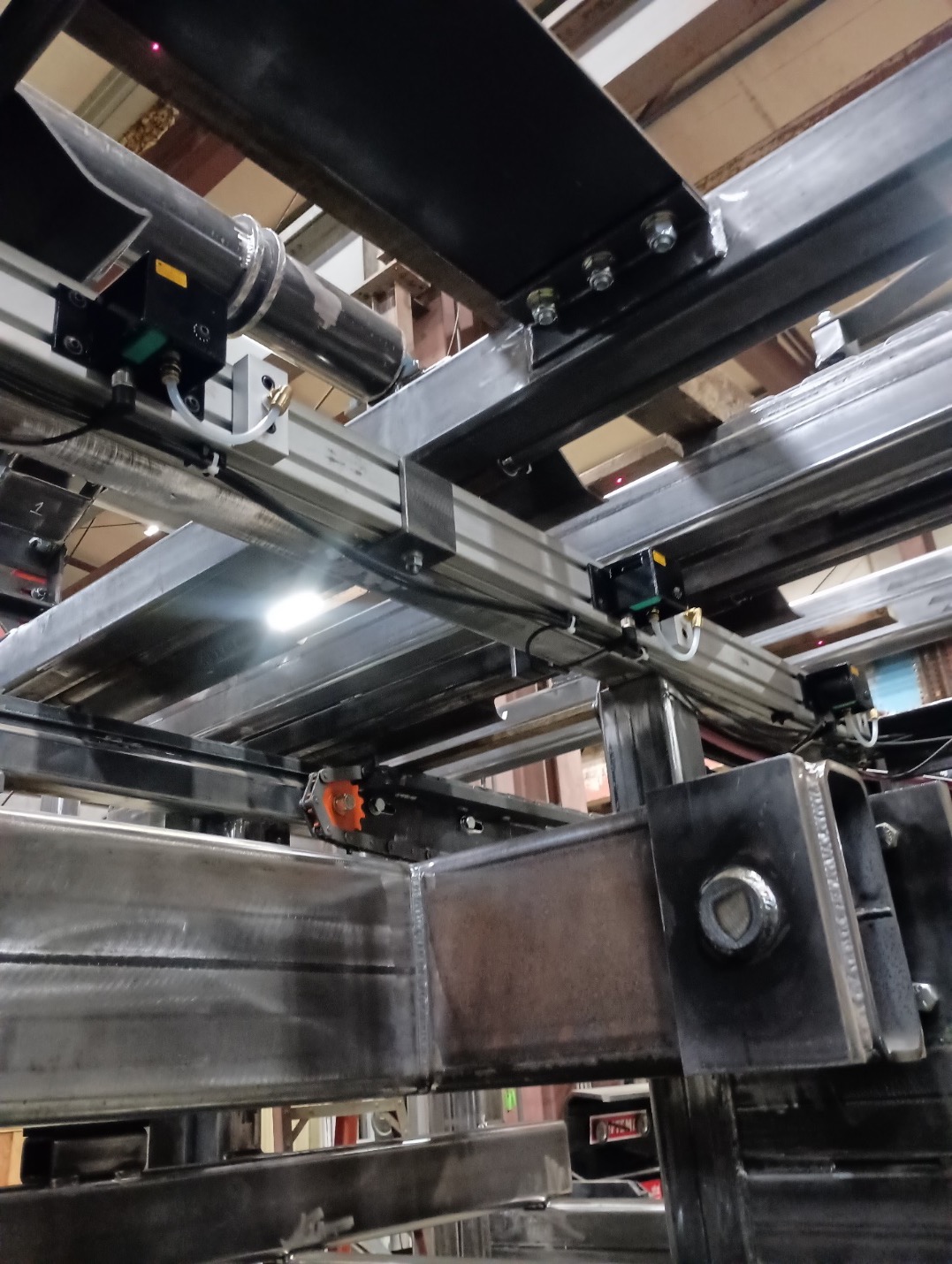
Design Philosophy
Sensing Is Verification, Not Complexity
The competitive argument for the Third Generation platform is not more automation for its own sake. It is this: the sensing layer exists to prevent the mechanical damage that drives unplanned maintenance. Overhead rake-off crash detection prevents the most destructive stacker failure. Pulled-back stick detection prevents the second. Stick-in-pan verification prevents cycle-on-fault conditions before they propagate.
The mechanical machine underneath is still a GBI stacker — hydraulic, shock-tolerant, cold-weather capable, engineered for 25-year service life. The GBI "no scheduled PM, no annual service contract" story still holds, because the new sensors reduce the mechanical events that generate unplanned service in the first place.
This is why GBI mills running the Third Generation platform see the same mechanical longevity their earlier-generation machines delivered, with materially fewer crash-driven downtime events and simpler day-to-day operation.
Deployment Paths
How to Get the Third Generation Platform
New GBI stackers ship on the Third Generation platform by default. The platform is the current production configuration — not a premium option.
Existing GBI stackers in the field can be retrofitted via the Controls, Sensors and Monitoring Upgrade, a bundled package that includes nine of the platform capabilities and is installed by a GBI electrical and mechanical technician team over approximately three days on-site. Some older control systems may require supporting hardware upgrades before the retrofit can be applied; GBI will confirm compatibility during proposal.
Remote support is available separately. GBI Remote Stacker Support adds cameras, an NVR, and a hardware-encrypted VPN so GBI automation and mechanical engineers can diagnose and resolve issues without the delay and cost of dispatching a technician.
Discuss Your Stacker
Specify a new Third Generation system, evaluate the Controls, Sensors and Monitoring Upgrade for a machine already in the field, or add Remote Stacker Support. Start here.
Get a Quote